Application Notes
Elevator Sheet Metal: Car and Door Panel Production
Elevator car walls, doors and landing frames repeat the same sheet metal operations. A process order that keeps counterbores, studs and long panels consistent.
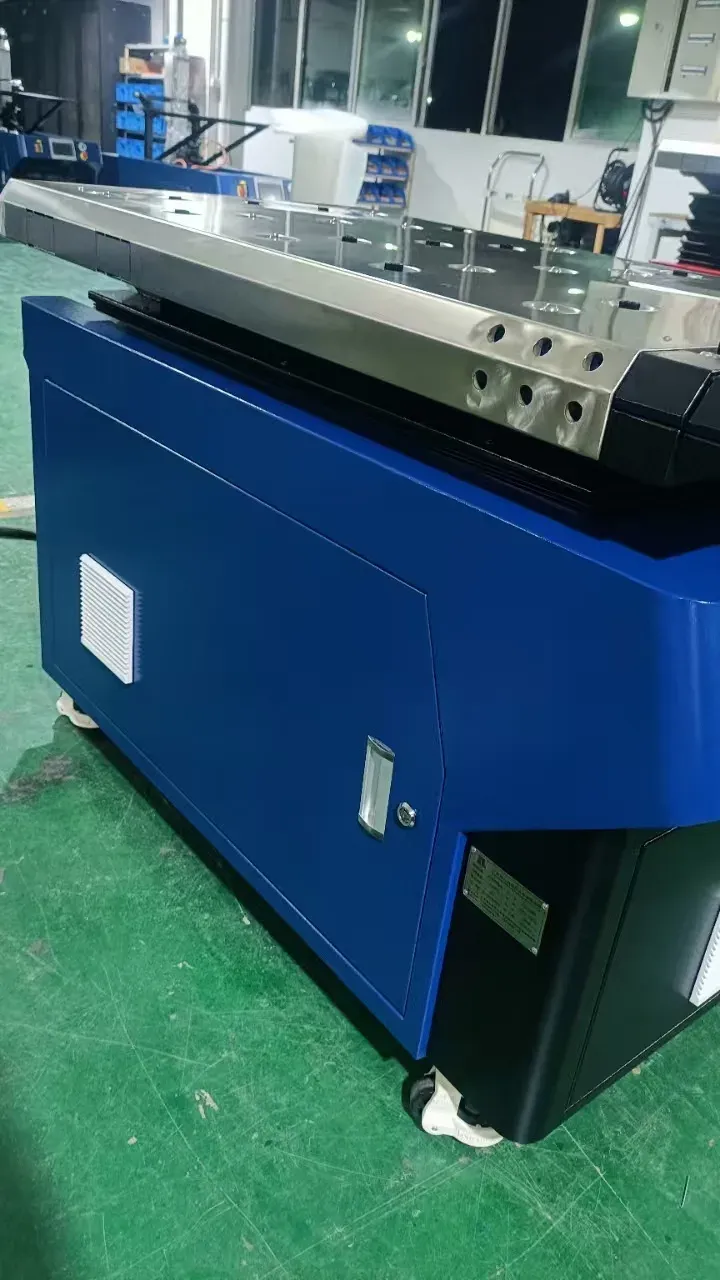
Much of an elevator's car and landing envelope is sheet metal that repeats: car walls, car doors, landing doors and their frames. Most car and door panels carry a pattern of holes and tapped points, many carry welded studs for brackets and cladding, and the visible panels are long enough that bending them by hand is where flatness and angle start to vary. The work is not difficult — it is repetitive, and repetition is where consistency is won or lost.
This note looks at that mix as a production problem: which operations repeat, in what order they should run, and which machine handles each step without dragging the panel back and forth across the shop.
The Four Operation Types That Repeat
In elevator sheet metal work, four operation types repeat:
• Counterbore and tapping for bracket, guide and cladding fasteners — a large number of holes on one panel.
• Stud welding for brackets, conduit clips and cladding supports that are fixed after painting.
• Long-panel bending for car walls and door skins, where the plate overhangs the press brake.
• Frame and plate milling for thicker structural parts — machine beams, sill supports and mounting plates.
The expensive part is not any single operation. It is the handling between them: every move adds a chance to scratch a visible panel and a chance for a hole pattern to shift against its datum.
An Order That Reduces Back-and-Forth Handling
For a typical car wall, a workable order is: cut the blank, counterbore and tap the pattern, bend the long edges, then weld the studs and finish. Studs can move before bending when they stay clear of the bend line and of the follower's support surface; otherwise they go after the bend.
That order only works if each flat operation references the drawing rather than an operator's marks. That is the common thread across the machines below.
Counterbore and Tapping From the Drawing
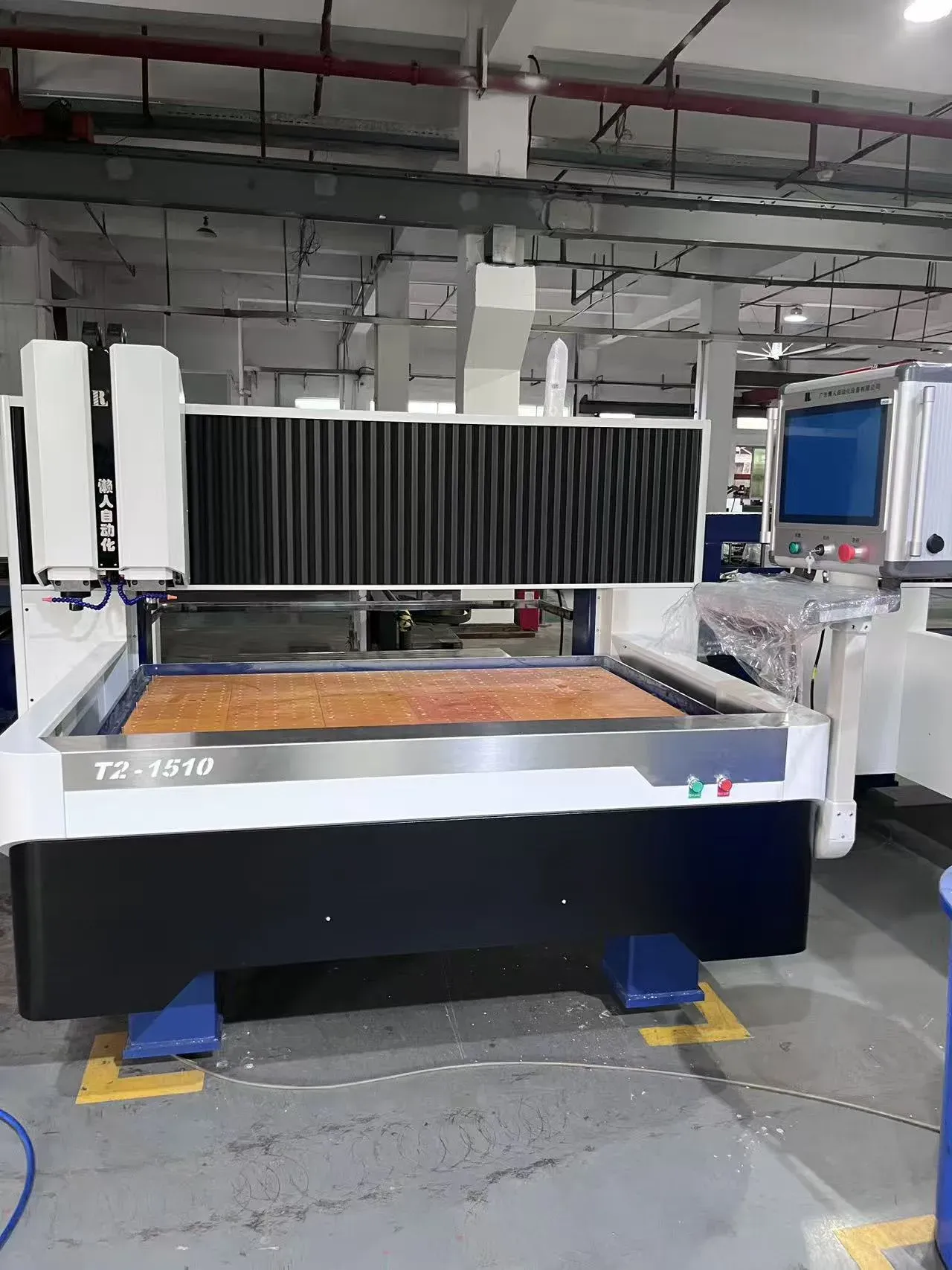
The counterbore and tapping step splits by panel type: flat panels such as elevator car panels and door skins on the T series, formed panels on the ZM below. The T series imports DXF files and generates G-code directly, so hole positions come from the drawing and the machine is specified to be run by general workers. Machining ranges run from 1000 x 800 mm to 2100 x 3500 mm across six models, with one to three spindles as a configuration choice.
Where the ZM Series Fits: Formed and Shaped Panels
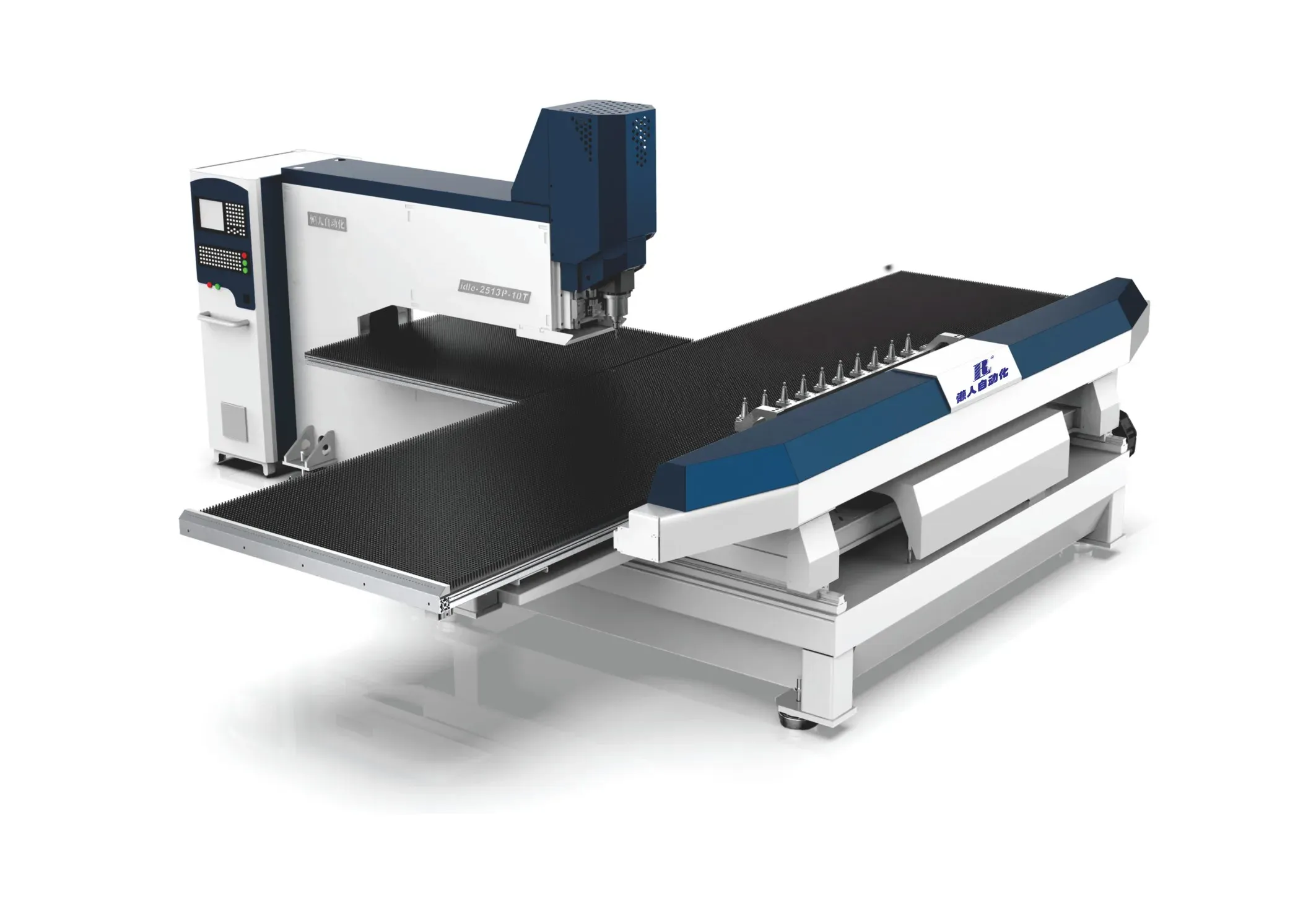
Some car parts arrive already formed — sills, corner pieces and reinforced panels with embossed areas and cut-outs. The ZM series holds those with a floating support structure and locates them with origin positioning blocks, so a shaped panel can be counterbored and tapped without a custom fixture for every variant. It covers 1500 x 1000 mm and 2500 x 1300 mm, with tools from 1.0 to 12.7 mm in ER25 collets and a five-axis control.
Where the H3 Fits: Stud Patterns in One Setup
Stud welding on car and landing panels is a pattern job: the same studs, in the same places, repeated across a batch. The H3 imports the pattern from a DXF drawing and places studs at 15 to 30 per minute, with stud diameters from 3 to 8 mm and lengths from 6 to 30 mm. Three welding guns and three feeders let one panel take several stud specifications without stopping for a tool change.
Where the F/EH Series Fits: Door Panel Manufacturing on the Brake
The long panels are the bending problem: a car wall or door skin overhangs the press brake, and someone has to hold and follow it through the bend. A sheet follower supports the plate through the stroke with its own control system and displacement sensor, without modifying the brake. The F/EH range covers lift weights from 80 to 500 kg, minimum bend angles of 90 or 30 degrees depending on model, and table lengths of 970 or 1280 mm with 2300 or 3200 mm extensions. Match your longest panel against table plus extension (F890: 970 + 2300 mm; EH models: 1280 + 3200 mm), and check the brake's table height and frame against the follower's minimum table height and front-wall clearance.
Where the GL Series Fits: Thicker Frames
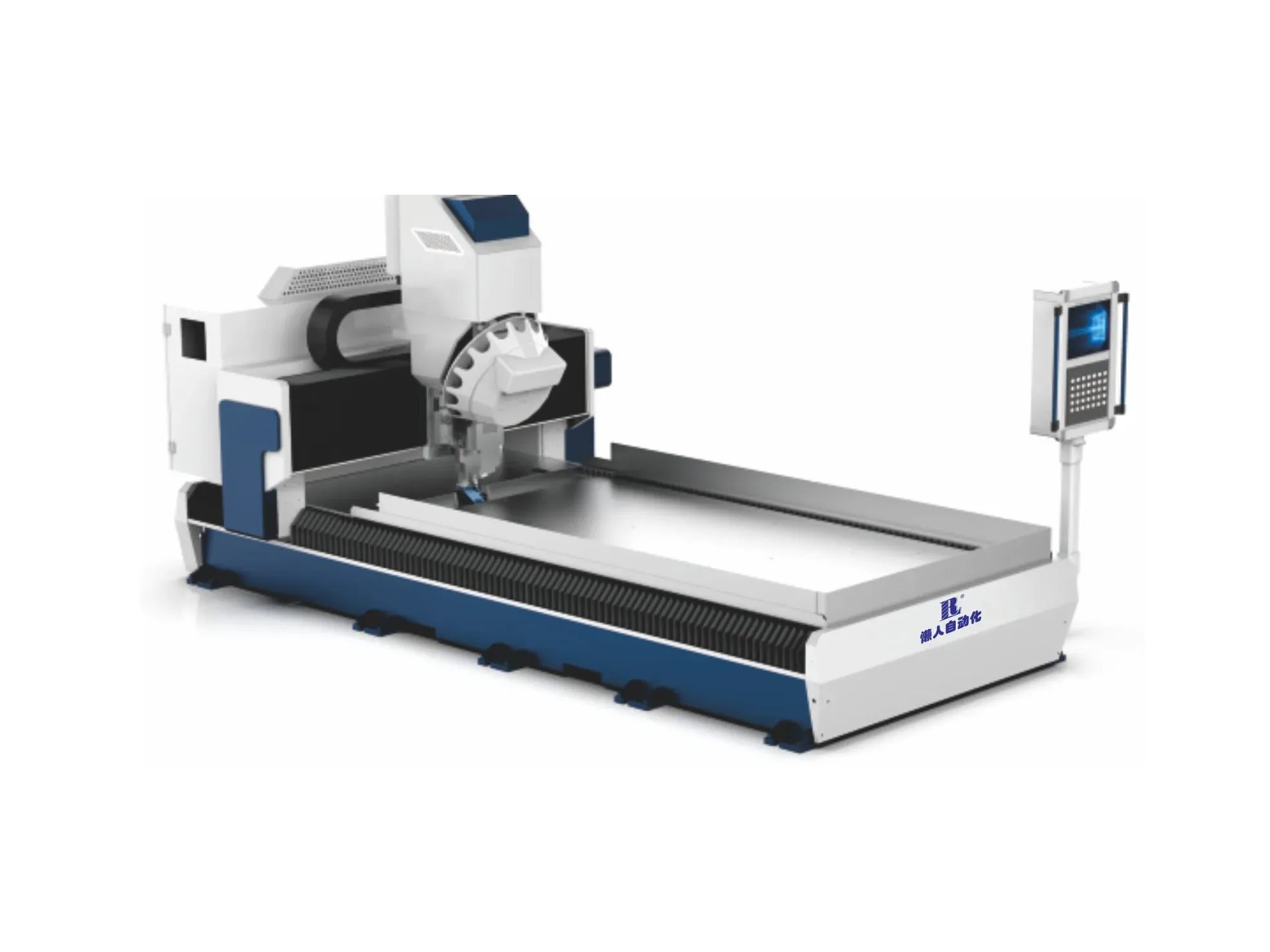
Structural parts that are thicker than sheet — sill supports, machine beams and mounting plates — move to the gantry milling platform. The GL series covers 1600 x 2500 mm to 2000 x 6000 mm with a six-axis control, a 12000 rpm spindle and 7.5 or 11 kW spindle power, for drilling, tapping and milling on the same bed.
What to Check When Specifying
• Largest and most awkward panel: the car wall that barely fits is the one that decides the envelope, not the average door panel.
• Hole and stud list: every diameter, tap size and stud specification, with quantities per panel.
• Drawing discipline: DXF import only pays back if the drawing is the released one and the datum is consistent across steps.
• Bend length and weight: match the follower's lift weight and table length to the longest, heaviest panel, and check the brake's table height and frame against the follower's mounting window (its minimum table height and front-wall clearance).
• Floor and lifting: machine weight and footprint change with envelope; check the bay before choosing the largest model.
Honest Limits
These machines remove hand work and re-handling; they do not replace the process around them. Bending still depends on the brake's tooling and the operator's setup, stud welding still needs the right process formula, and hole quality still depends on tool condition. If a line runs very few panels per variant, the programming and setup effort may outweigh the automation — that is a volume question, not a machine question.
FAQ
Can one machine do holes, studs and bending? No single machine in this lineup combines hole making, stud welding and bending; each step has its own machine. The gain comes from running them in a fixed order on flat panels so the part is not re-fixtured between steps.
What panel sizes can the T series handle? From 1000 x 800 mm up to 2100 x 3500 mm across six models, with one to three spindles depending on configuration.
How heavy a panel can the follower support? From 80 kg on the compact F890 up to 500 kg on the EH5090 and EH5030, with 90 or 30 degree minimum bend angles depending on model.
Do we need custom fixtures for shaped parts? Not for the shaped panels the ZM is built for: origin positioning blocks locate the part and a floating support adapts to the formed underside, which is what removes the per-variant fixture.
What should we send to get a recommendation? The largest and most awkward panel, the hole and stud lists, the bend length and weight, and the drawing you release to the shop floor.
What to Send for a Process Recommendation
Send your panel drawings (DXF or PDF), the hole and stud specifications, the longest and heaviest panel you bend, and your press brake model. Our team will map the operations to the machines that fit and confirm the envelope, spindle count and follower configuration — a process you can check against your own drawings before committing.